20Ott/23

War and peace in the global village. Second half – by Giacomo Buoncompagni*

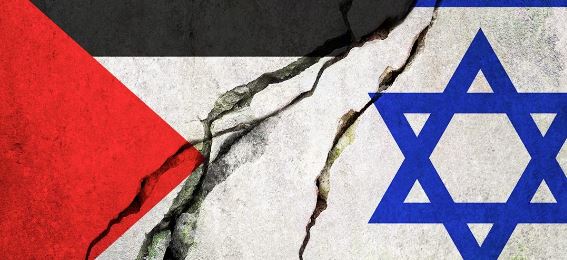
Shortly after the clashes in Ukraine, the apparently silent Israeli-Palestinian conflict reignited, at least in the Western media. A few months later, more blood, death and hostages between polarised information and a desperate plea for peace. Diversity has historically been a potential source of friction and misunderstanding.

Continue reading →
17Ott/23

Effetto Hamas: l’attacco a Israele e la nuova utopia radicale – by Sara Brzuszkiewicz

Nuovi allarmi bomba nelle scuole francesi, a tre anni di distanza dalla decapitazione di Samuel Paty, il professore che il 16 ottobre 2020 venne ucciso da Abdoullakh Abouyezidovich Anzorov, diciottenne ceceno rifugiato in Francia, dopo una campagna online contro il docente, colpevole di aver mostrato alcune vignette di Charlie Hebdo ritraenti il profeta Muhammad.

Continue reading →
09Ott/23

Hamas attack in Israel: European security perspectives – by Maria Chr. Alvanou

As the world is watching Hamas attacking Israel in an unprecedent violent terrorist campaign within its borders, it is important to understand that the situation is also a security crisis from a European perspective. The following points show why Hamas actions are dangerous for European security and parameters that need attention in order to prevent and manage the threat created:

Continue reading →
02Ott/23

Gang o aggruppamenti predatori urbani? – by Giovanni Giacalone

Cosa c’è dietro il fenomeno delle violente aggressioni a scopo di rapina che sta caratterizzando i grandi centri urbani italiani. Negli ultimi mesi si è parlato molto di aggressioni a scopo di rapina, spesso in pieno giorno e in zone centrali delle grandi aree metropolitane italiane e messe in atto da gang e dalle cosiddette “baby-gang”, termine quest’ultimo che come vedremo risulta quanto meno inappropriato se non errato.

Continue reading →
29Set/23

Time to be realistic about Swarmcast2.0 – by Ali Fisher

For all the meetings, presentations and reports from embedded academics and industry groups, purporting to show success against Salafi-Jihadi groups, the movement is still comfortably able to disseminate content through Swarmcast2.0.

The Western metanarrative has long been accepted by the orthodoxy of Terrorism Studies. However, while claims of success resonate at events hosted by industry funded bodies, the challenge encapsulated by Swarmcast2.0 remains. Salafi-Jihadi groups and the media mujahidin maintain persistent networks which function across multiple platforms simultaneously.

Continue reading →
01Set/23

The Necessary Sanctification of Ryan Palmeter – By Federico Borgonovo & Silvano Rizieri Lucini

On the 26th August 2023, a new far-right terrorist attack occurred in the United States. The attacker, Ryan Palmeter drove to a supermarket in a predominantly African-American neighbourhood and then opened fire with a PSA-15 semi-automatic rifle and a Glock G20. He then committed suicide when the police arrived.  Evidence of the modus operandi adopted emerged from the information gathered in open source. We identified two types of information sources:

Continue reading →
30Ago/23

Wagner Digital Ecosystem: what happens after Prigozhin’s Death – By Federico Borgonovo & Giulia Porrino

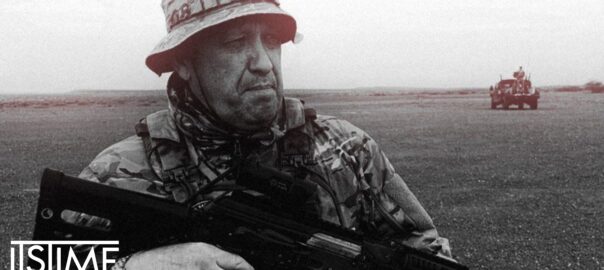
After the March of Justice, announced on June 23, the evolution of the relationship between Russian President Vladimir Putin and PMC Wagner head Yevgeny Prigozhin was discussed at length. On August 23, exactly two months later, one of the private jets on which Yevgeny Prigozhin and Dmitry Utkin, considered his right hand, were traveling crashed en route between Moscow and St. Petersburg.

Continue reading →
13Ago/23

Soccer hooliganism episode in Athens: lessons from a security perspective – by Maria Chr. Alvanou

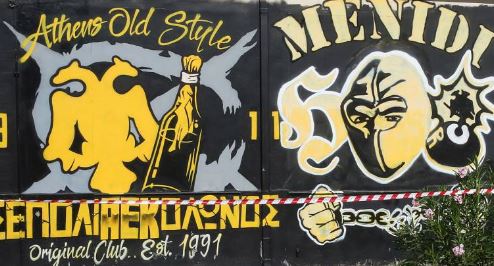
An episode of hooligan violence, with a 22-year-old man dying from multiple stab wounds took place in Athens, Greece, the night before Tuesday’s UEFA Champions League qualifying soccer match between teams AEK (Greece) and visiting Dinamo Zagreb (Croatia).[1] Additionally to one man violently losing his life, there are 8 people injured (Croatian and Greek) and the clashes were especially violent.

Continue reading →
26Giu/23

PMC Wagner and Allied Mercenaries, Aftermath of the March by – Federico Borgonovo & Giulia Porrino

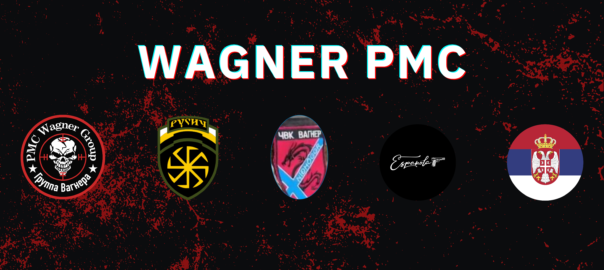
During the Russian-Ukrainian conflict, PMC Wagner exploited online and offline support of some military groups, including:

  • Española, a parallel battalion of Russian ultras led by Alexander Shum and with a special training centre near San Petersburg.
  • Rusich, a reconnaissance, sabotage and assault group, directly attached to the PMC Wagner.
  • Serb members, active since the deployment in Syria. Those are linked with several ultras’ communities.
  • Níðhöggr (Nidhogg), a little unit near to the Scandinavian right-wing militia funded by an actual Wagner member.  

All these units were orbiting around the PMC Wagner as embedded support groups. Starting from their online propaganda we theorized a pro-Wagner alliance system (figure 1).

Continue reading →